
What Does a Paediatric Speech Pathologist Do?
Many families are surprised to learn just how wide‑ranging the role of a paediatric speech pathologist is. It’s much more than helping children pronounce sounds or teaching them to talk.
At its core, speech therapy for children supports communication in all its forms—from first words to social conversations, from reading development to safe feeding.
If you’re new to speech therapy for your child, here’s a clear, parent-friendly guides to how paediatric speech pathologist can help.
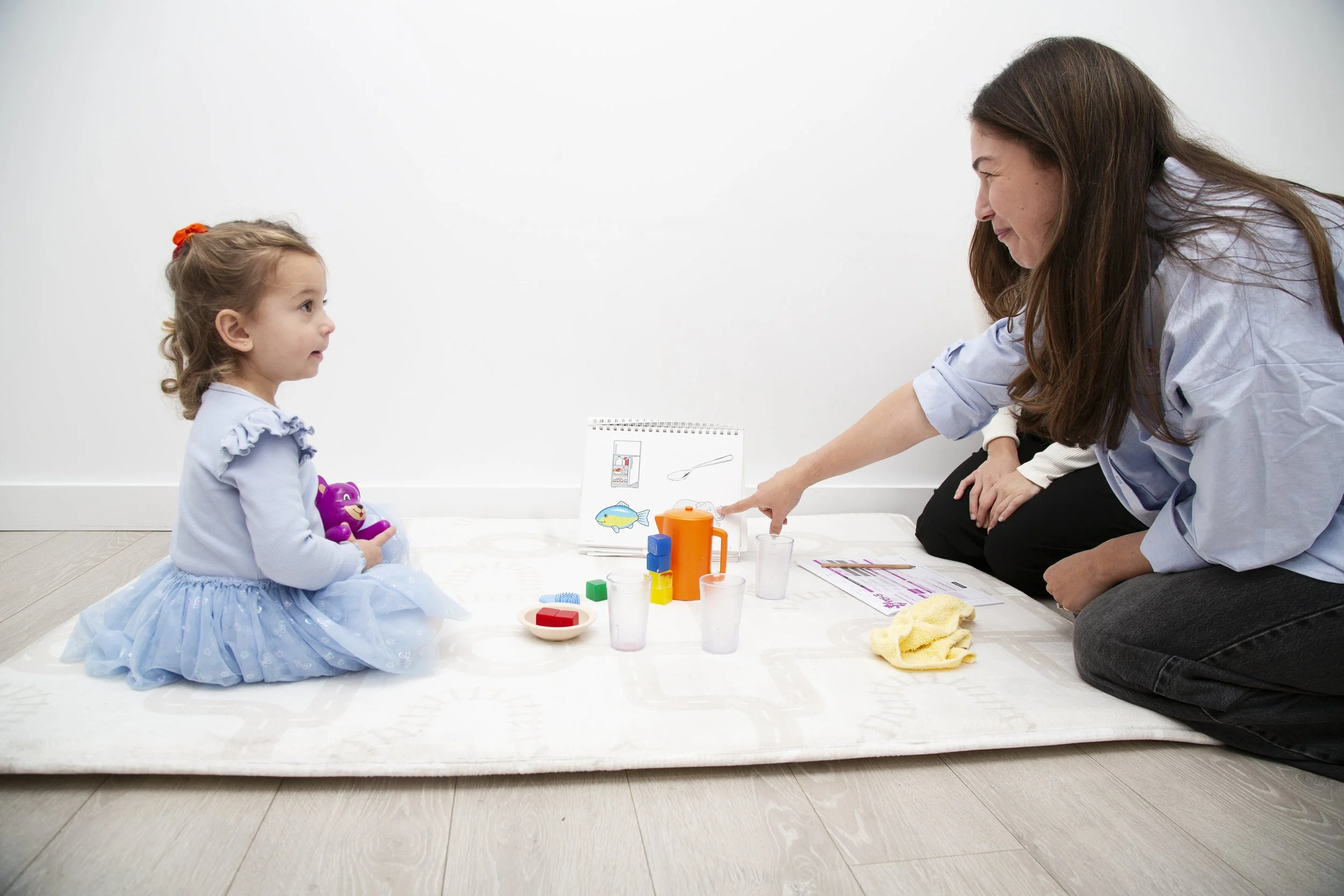
What Does a Paediatric Speech Pathologist Help With?
A paediatric speech pathologist supports children across several key areas of development:
Speech sounds (articulation)
Language (understanding and expressing ideas)
Social communication
Literacy (reading and spelling)
Voice
Fluency (stuttering)
Feeding and mealtimes
AAC (Augmentative and Alternative Communication)
1. Speech Sound Development
Articulation refers to how children physically produce speech sounds. A speech pathologist for children can help if your child:
Has unclear speech (e.g. interdental lisp - sticking the tongue out for “s”)
Substitutes one sound for another (e.g. “tat” for “cat”)
Has difficulty differentiating between different sounds (e.g. “p” and “b”)
Uses speech that is difficult for caregivers, teachers, or peers to understand
Through fun, age‑appropriate activities in speech therapy, children learn how to position their mouth, build awareness of their sounds, and speak with greater clarity and confidence.
2. Language Development: Understanding, Speaking, Social Communication, and Literacy
Language is the foundation for learning, connection, emotional expression, and participation across all stages of childhood and adolescence.
Children may access speech therapy for language development for many different reasons—not just in the early years. Language continues to grow and become more complex over time, supporting everything from play and friendships to classroom learning and independence.
A paediatric speech pathologist supports children and young people across several areas:
Receptive Language (Understanding Language) includes:
Following directions
Learning concepts and vocabulary
Understanding WH questions
Understanding stories
We help children who struggle with processing language, understanding questions, or keeping up in conversations.
Expressive Language (Using Words and Sentences) includes:
Using vocabulary
Using grammar
Using sentence structures
Storytelling skills
We support children who have limited language, late talking, difficulty forming sentences, difficulty expressing their basic wants and needs, or challenges describing and organising their thoughts.
3. Social Communication (Connecting with Others)
Social communication is how children use language to connect, interact, and build relationships across different environments.
This includes a wide range of skills such as:
Initiating and maintaining interactions
Turn-taking and shared attention
Conversation and play skills
Understanding perspectives and navigating social situations
Interpreting and using verbal and non-verbal communication in ways that feel meaningful for the individual
We provide neurodiversity-affirming speech therapy for social communication, recognising that there is no single “right” way to communicate. We support each child’s unique communication style, including autistic communication, gestalt language processing, AAC use, and non-speaking communication.
Our focus is on building connection, understanding, and confidence—supporting children to communicate in ways that are authentic, comfortable, and effective for them.
4. Literacy (Reading and Spelling)
Speech pathologists also help with literacy development in children to build skills linked to later reading success, such as:
Phonological awareness (hearing and playing with sounds)
Letter‑sound knowledge
Spelling and written expression
Reading comprehension
These early foundations help children become confident and capable readers.
4. Voice: Supporting Healthy, Strong, Comfortable Voices
Some children experience voice difficulties such as:
Hoarse or strained voice
Voice loss from shouting
Breathiness or vocal fatigue
Voice therapy for children focuses on building healthy voice habits, improving breath support, and reducing strain in a way that feels comfortable and sustainable.
5. Fluency (Stuttering Support)
Fluency refers to the ability to speech with smooth and uninterrupted speech. Some children who require stuttering support experience:
Repetitions (e.g. “ma‑ma‑ma‑mummy”)
Stretchy sounds (e.g. “mmm...mummy”)
Blocking (e.g. getting “stuck” on a sound)
Early, supportive, pressure‑free intervention can make a significant difference. Speech pathologist help children build communication confidence, learn fluency strategies, and feel understood and safe during moments of stuttering.
6. Feeding Therapy and Mealtime Skills
Paediatric speech pathologists also work with infants and children who have feeding or swallowing challenges, including:
Difficulty chewing certain textures
Gagging or pocketing food
Picky eating beyond typical preferences
Delayed oral‑motor skills
Sensory feeding challenges
Therapy aims to make mealtimes safer, more enjoyable, and less stressful for families—using gentle, positive and responsive feeding approaches.
7. AAC: Alternative Ways to Communicate
AAC (Augmentative and Alternative Communication) includes tools and strategies that support verbal communication, such as:
Picture boards
Communication books
Key word signs
Speech‑generating devices
High‑tech apps or devices such as eye‑gaze systems, LAMP Words for Life®
AAC does not replace verbal communication — it supports communication and often boosts language development.
We guide families in choosing the right system, customising vocabulary, and building communication confidence across environments.
AAC is strongly evidence-based and supports children to communicate in ways that allow their voice to be heard and understood.
Beyond Our Scope of Practice: We Support the Whole Child and Family
Paediatric speech pathologists don’t just teach skills—we build relationships, celebrate wins and strengths, and support families. Speech therapy for children is guided by each child’s interests, sensory needs, learning style, and cultural background.
We collaborate with parents, teachers, and other professionals so children receive consistent, compassionate support across settings.
Above all, we help children communicate in ways that feel natural, joyful and empowering for them.
Looking for a Paediatric Speech Pathologist in Sydney?
We support families across Maroubra, Sandringham and the wider Eastern Suburbs, and St George area.
Our therapist also offer online speech therapy who prefer or require flexible access to support.
If you’re considering speech therapy for your child, we’d love to support you.
👉 Book a Free Discovery Call with one of our speech therapists.