
Picky Eating vs Problem Feeding: How to Tell the Difference
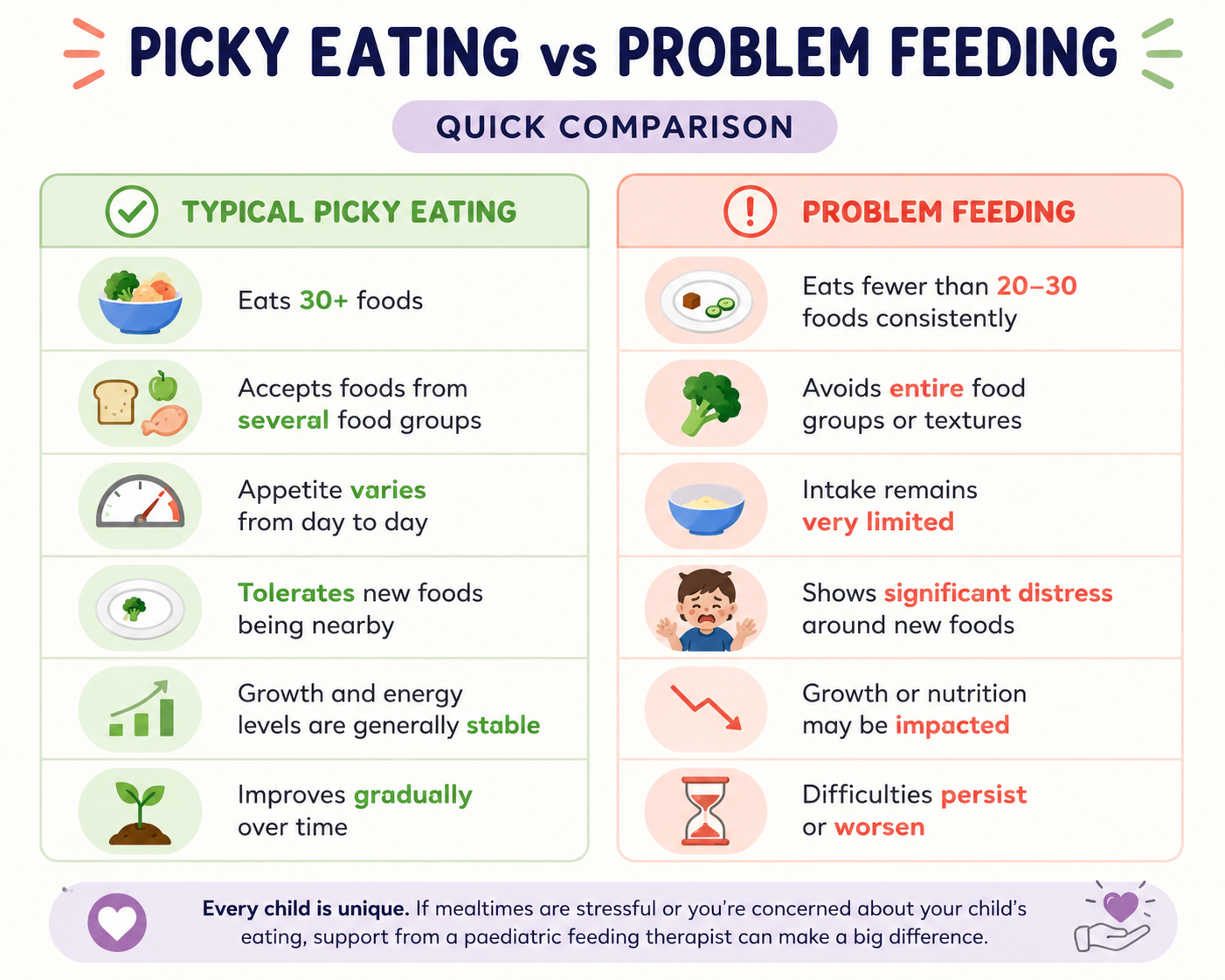
Many children go through phases of picky eating, especially during toddlerhood and the preschool years. Preferences change, appetites fluctuate, and some hesitation around new foods is developmentally common. For some families, however, feeding challenges go beyond “typical picky eating” and begin to impact daily life, nutrition, emotional wellbeing, and family routines.
Understanding the difference between picky eating and problem feeding can help families know when additional support from a paediatric feeding therapist may be beneficial.
At Eat Speak Play, our speech pathologists provide neurodiversity-affirming, responsive feeding therapy for children across Sydney, including the Eastern Suburbs, St George area, and Sutherland Shire, as well as online feeding therapy Australia-wide.
What Is Typical Picky Eating?
Picky eating is common in early childhood and often reflects a child’s growing independence, changing sensory preferences, and natural developmental stages.
A child who is experiencing typical picky eating may:
Prefer familiar foods
Go through phases of refusing previously accepted foods
Be cautious around new foods
Have fluctuating appetites from day to day
Need repeated exposure before trying something new
While this can feel frustrating for families, children with typical picky eating generally continue to:
Eat foods from multiple food groups
Maintain growth and energy levels
Tolerate being around unfamiliar foods
Gradually expand their diet over time
What Is Problem Feeding?
Problem feeding occurs when feeding difficulties significantly impact a child’s ability to eat, participate in mealtimes, or meet their nutritional and developmental needs.
Problem feeding may look like:
Eating fewer than 20–30 foods consistently
Refusing entire textures or food groups
Gagging, vomiting, coughing, or choking during meals
Extreme distress or anxiety around eating
Difficulty sitting at the table or participating in family meals
Reliance on screens, pressure, bribery, or chasing to eat
Mealtimes regularly lasting longer than 30–40 minutes
Ongoing feeding challenges beyond the toddler years
Families often describe mealtimes as:
Stressful
Exhausting
Emotional
Isolating
Difficult to manage socially or outside the home
Why Feeding Difficulties Happen
Feeding challenges are rarely “just behavioural.”
Eating is actually a very complex task involving:
Sensory processing
Oral-motor coordination
Swallowing skills
Interoception (awareness of hunger/fullness)
Emotional safety
Past experiences with food
Medical history
Environmental factors
Some children may experience:
Sensory sensitivities to textures, smells, temperatures, or appearance
Oral-motor difficulties with chewing or coordinating food safely
Anxiety linked to gagging, reflux, or negative experiences
Reduced body awareness around hunger and fullness cues
Signs Your Child May Benefit from Feeding Therapy
It may be helpful to seek support from a paediatric feeding therapist if:
Your child’s diet feels extremely limited
Mealtimes consistently feel stressful or overwhelming
Your child avoids social eating situations
Feeding difficulties are affecting family wellbeing
Your child is losing weight or not growing as expected
You notice gagging, coughing, choking, or vomiting during meals
Feeding challenges are persisting over time instead of improving gradually
Early support can help reduce stress and prevent feeding challenges from becoming more entrenched over time.
How Feeding Therapy Helps
Paediatric feeding therapy focuses on helping children feel safe, confident, and supported around food.
Importantly, feeding therapy is not about forcing children to eat or using rewards and pressure to increase intake.
Instead, we focus on creating opportunities for children to build trust, confidence, and feeding skills at their own pace.
Feeding goals may include:
Expanding food variety
Increasing participation in family meals
Supporting safe chewing and swallowing
Reducing distress at mealtimes
The Role of Parents in Feeding Therapy
Parents are an essential part of feeding support. Therapy often includes helping families:
Understand their child’s feeding profile
Reduce mealtime stress and pressure
Create supportive routines
Respond to feeding challenges with greater confidence
Build positive and sustainable mealtime experiences
Small changes in the environment and interactions around food can make a meaningful difference over time.
Feeding Therapy at Eat Speak Play
Eat Speak Play provides paediatric feeding therapy for babies, toddlers, children, and teenagers. Our speech pathologists support children with:
Picky eating
Problem feeding
Sensory feeding difficulties
Oral-motor feeding challenges
Gagging and vomiting with food
Limited diets
Food refusal
We offer feeding therapy in our Sydney clinics, through school-based services where appropriate, and via telehealth.
Final thoughts
If feeding feels like a daily battle, you are not alone.
Many families are told children will “grow out of it,” however ongoing feeding difficulties can place significant stress on both children and caregivers. Support does not need to wait until things feel severe.
With responsive, respectful, and evidence-informed support, children can develop greater comfort, confidence, and participation around food over time.
Looking for a Paediatric Feeding Therapist in Sydney?
We support families across the Eastern Suburbs, St George area and Sutherland Shire in Sydney.
Our therapist also offer online speech therapy who prefer or require flexible access to support.
If you’re considering speech therapy for your child, we’d love to support you.
👉 Book a Free Discovery Call with one of our speech therapists.