
What To Expect In A Feeding Therapy Session
Feeding therapy can feel unfamiliar for many families, particularly when mealtimes have become stressful, challenging, or overwhelming.
One of the most common questions parents ask is:
“What actually happens in a feeding therapy session?”
At Eat Speak Play, our paediatric feeding therapy sessions are designed to support children in building positive relationships with food while developing the skills needed for enjoyable, safe, and successful mealtimes. We take a responsive, child-centred approach that respects each child's individual needs, sensory preferences, developmental stage, and communication style.
We use a combination of the Sequential Oral Sensory (SOS) Approach and Responsive Feeding Therapy (RFT) approaches to help children build confidence, comfort, and positive experiences around food.
Importantly, the goal of feeding therapy is not always to get a child to eat the food. For many children, the first steps involve simply feeling safe around food, interacting with it, exploring it, and reducing stress at mealtimes. Progress can look like touching a new food, smelling it, helping prepare it, or tolerating it on the table and these are all meaningful achievements.
Every child is different, which means every feeding therapy journey looks different too. However, there are some common elements families can expect.
Starting the Session
At the beginning of a session, we focus on creating a calm and predictable routine. This often starts with the child washing their hands alongside the therapist. This simple step helps transition into the feeding activity and gives the child a sense of participation and readiness.
From there, we often involve the child in collecting ingredients or gathering foods from the fridge and cupboard. Depending on the child’s goals and comfort level, they may help:
Choose some of the foods for the session
Carry ingredients to the table
Open containers or packaging
Mix, spread, cut, or assemble foods
Set up the eating space
Involving children in food preparation helps reduce pressure and increases familiarity with foods in a playful and engaging way.
Supporting Regulation and Comfort
Many children who experience feeding difficulties may also have sensory, oral motor, medical, or emotional factors impacting eating. Because of this, feeding therapy often includes support for:
Sensory regulation
Mealtime routines
Reducing anxiety around food
Building body awareness and comfort
Creating positive parent-child interactions during meals
We aim to make the therapy environment feel safe, responsive, and enjoyable.
Food Exploration and Play
Many parents are surprised to learn that feeding therapy does not usually begin with asking a child to eat unfamiliar foods.
Instead, therapists often support children to explore foods in a variety of ways. We encourage children to interact with food at their own pace. This may include:
Looking at the food
Smelling the food
Touching or squishing it
Using utensils to move or cut it
Licking or tasting
Taking small bites if they feel comfortable
We follow the child’s cues closely and avoid forcing or pressuring them to eat. Building trust and positive experiences around food is a key part of therapy.
This gradual approach helps reduce pressure and supports children to build familiarity and confidence over time.
For some children, sessions may look very playful. We might create faces with food, use imaginative play, compare textures, or talk about colours, smells, and sounds. These experiences help children become more comfortable and curious around new foods.
Building Feeding Skills
Depending on your child's goals, therapy may support a range of feeding skills, including:
Oral Motor Skills
These are the physical skills needed for eating and drinking safely and efficiently.
Therapy may target:
Chewing skills
Tongue movements
Lip closure
Drinking skills
Managing different food textures
Sensory Feeding Skills
Some children experience differences in how they process sensory information related to food.
Therapy may support children to gradually become more comfortable with:
Different textures
New tastes
Food smells
Food appearance
Messy play experiences
Mealtime Participation
For some children, therapy focuses on helping mealtimes feel more predictable, enjoyable, and manageable.
This may include:
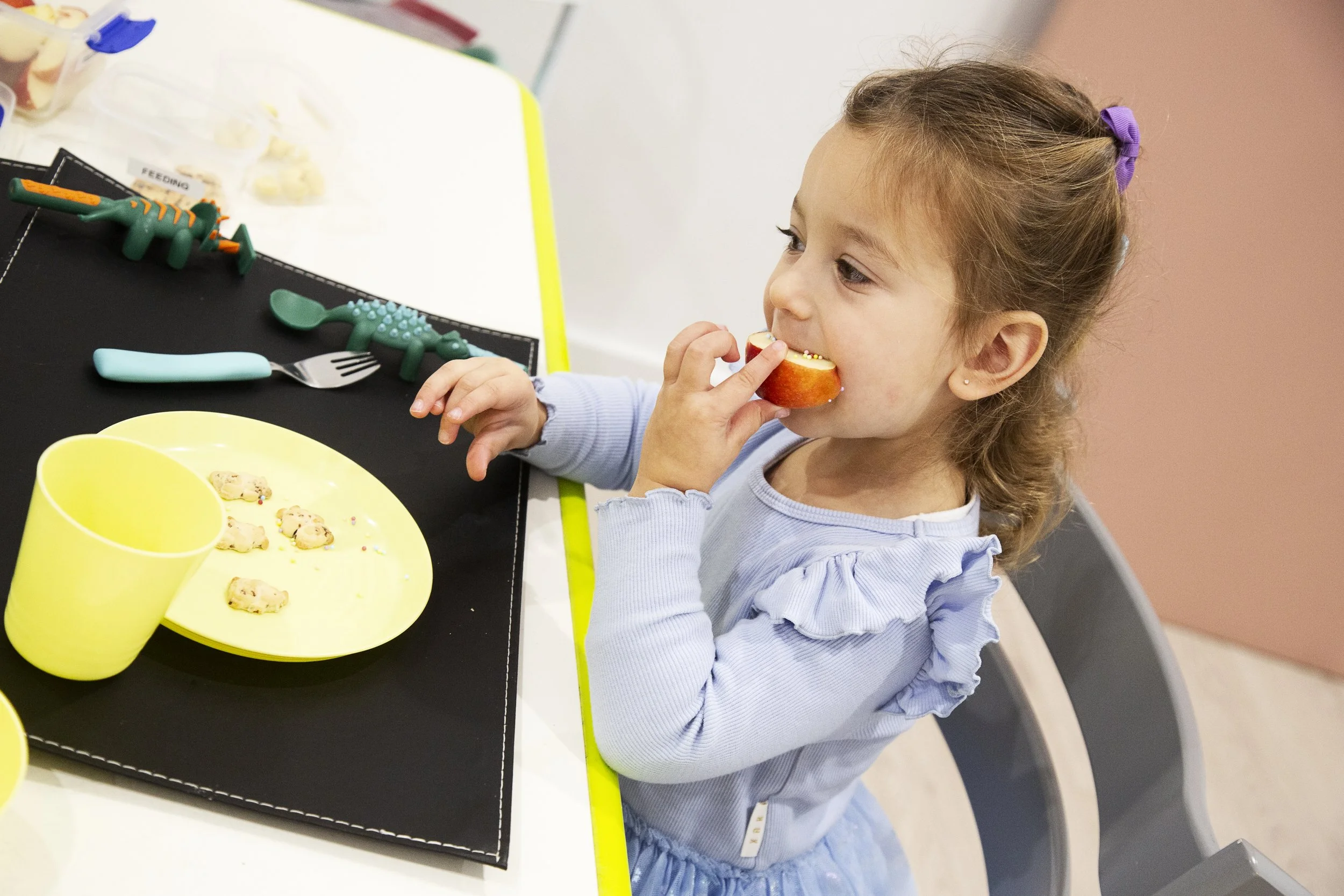
Sitting comfortably during mealtimes
Participating in family meals
Exploring foods without pressure
Building confidence around new experiences
Parent Involvement and Strategies
Parents and caregivers are an important part of feeding therapy. During or after sessions, we discuss:
Strategies that are working well
Recommendations for home mealtimes
Ways to reduce pressure around eating
How to support food exploration at home
Appropriate expectations for progress
Food chaining or gradual exposure ideas
Our goal is to help families feel confident and supported, not overwhelmed.
Small changes implemented consistently at home often have the greatest impact over time.
What Progress Can Look Like
Progress in feeding therapy is often gradual and may not always look like eating large amounts of food straight away. Success can include:
Sitting at the table for longer
Tolerating a new food nearby
Touching or smelling a food
Helping prepare meals
Taking a tiny taste
Feeling calmer and more positive during mealtimes
Every child’s feeding journey is different, and we celebrate all steps forward.
A Responsive and Neurodiversity Affirming Approach
At Eat Speak Play, we use responsive and neurodiversity-affirming approaches to feeding therapy.
We recognise that eating is influenced by many factors, including sensory processing, motor skills, communication, health, previous experiences, family routines, and culture.
Rather than focusing on compliance or pressure-based strategies, we work alongside children and families to create positive, supportive opportunities for learning and exploration.
Our goal is to help children develop skills, confidence, and comfort around food while respecting their autonomy and individual needs.
Through playful exploration, responsive support, and gradual exposure, feeding therapy can help children develop healthier relationships with food over time.
Frequently Asked Questions
Do parents attend feeding therapy sessions?
In most cases, yes. Parent involvement is an important part of feeding therapy, and therapists often provide coaching and strategies that can be used at home.
Will my child be expected to eat new foods during therapy?
No. Feeding therapy often begins with building comfort, trust, and familiarity around food. Eating may be one goal, but progress can occur long before a child takes a bite.
How long does feeding therapy take?
Every child is different. The length of therapy depends on your child's goals, strengths, needs, and the factors contributing to their feeding differences.
Is feeding therapy only for picky eating?
No. Feeding therapy can support a wide range of feeding differences, including oral motor challenges, sensory feeding differences, transitioning to solids, mealtime anxiety, chewing difficulties, and swallowing concerns.
Looking for Feeding Therapy in Sydney?
At Eat Speak Play, we provide paediatric feeding therapy for children and families across Maroubra, Sandringham, the Eastern Suburbs, St George, and surrounding areas, as well as through online feeding therapy for families seeking flexible access to support.
Our therapists use responsive, relationship-based approaches to help children build confidence, comfort, and positive experiences around food.
👉 Book a Free Discovery Call with one of our speech therapists.