
Gagging, Choking & Vomiting at Mealtimes: When to Seek Help
Watching your child gag, cough, or vomit during meals can feel incredibly distressing. Many parents wonder whether these experiences are a typical part of learning to eat or a sign that their child may benefit from feeding therapy.
At Eat Speak Play, we support families across Sydney, including the Eastern Suburbs, St George area and Sutherland Shire, with paediatric feeding therapy. We also provide feeding therapy through online sessions.
Gagging on foods can be a normal part of learning to eat, particularly when babies and toddlers are exploring new textures and developing chewing skills. However, continual gagging with food is not safe and could increase the risk of a child developing oral aversions or choking.
Coughing, spluttering or vomiting during mealtimes may also indicate that feeding is not developing smoothly and can place children at risk of feeding aversion, stress around eating, and even choking.
Is Gagging Normal When Babies Start Solids?
Yes — gagging can be a normal protective reflex when babies and toddlers are learning to manage new textures.
The gag reflex helps prevent food from moving too far back in the mouth before a child is ready to chew and swallow it safely.
As children gain experience with solids, their gag reflex typically becomes less sensitive.
Occasional gagging is common when:
Starting solids
Transitioning from purees to textured foods
Learning to bite and chew
Exploring new food textures
However, frequent gagging, vomiting, or distress at meals may suggest your child is finding eating more challenging than expected.
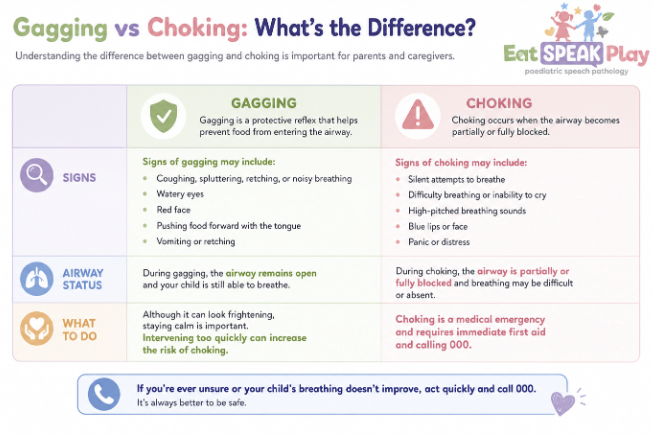
Gagging vs Choking: What’s the Difference?
Understanding the difference between gagging and choking can help parents respond confidently during meals.
Gagging
Gagging is a protective reflex that helps prevent food from entering the airway.
Signs of gagging may include:
Coughing, spluttering
Watery eyes
Red face
Pushing food forward with the tongue
Vomiting or retching
During gagging, the airway remains open and your child is still able to breathe. Although it can look frightening, staying calm is important. Intervening too quickly can increase the risk of choking.
Choking
Choking occurs when the airway becomes partially or fully blocked.
Signs of choking may include:
Silent attempts to breathe
Difficulty breathing or inability to cry
High-pitched breathing sounds
Blue lips or face
Panic or distress
Choking is a medical emergency and requires immediate first aid and calling 000.
Why Does My Child Gag or Vomit During Meals?
There are many reasons a child may gag, cough, or vomit at mealtimes, including:
Sensitivity to food textures
Delayed chewing skills
Difficulty coordinating swallowing
Large bites or overstuffing
Anxiety or previous negative feeding experiences
Oral-motor challenges
Sensory processing differences
Signs Your Child May Need Feeding Support
Some feeding difficulties improve naturally over time, while others benefit from early intervention and assessment by a feeding therapist.
You may wish to seek support if your child experiences:
Frequent gagging, coughing, or spluttering during meals
Vomiting or retching with certain foods
Large gulping swallows
Difficulty transitioning from puree to textured foods
Gagging on lumps after managing smooth purees well
Refusal of solids or textured foods
Very limited food variety
Lack of interest in eating
Only wanting breastfeeds or bottles beyond expected developmental stages
Stress, distress, or anxiety around meals
Avoiding mouthing toys, teethers, or spoons
Long or exhausting mealtimes
Persistent feeding difficulties can impact nutrition, growth, oral-motor skill development, and a child’s overall relationship with food. While some children do naturally progress, ongoing gagging, vomiting, food refusal, or stressful mealtimes are not something families need to manage alone.
How Feeding Therapy Can Help
Paediatric feeding therapy helps children build the skills and confidence needed to eat safely and comfortably.
At Eat Speak Play, our speech pathologists are trained in:
The SOS Approach to Feeding
Responsive Feeding
Neurodiversity-affirming feeding therapy
Therapy may support:
Oral-motor skill development
Sensory exploration of foods
Safe chewing and swallowing
Reducing mealtime stress
Parent coaching and practical strategies
We use a pressure-free approach that respects each child’s pace and autonomy.
How to Get Started
If you’re looking for paediatric feeding therapy in Sydney across the Eastern Suburbs, St George area or Sutherland Shire, our team at Eat Speak Play is here to support you. We also provide online feeding therapy sessions for families wanting support from home.
Our feeding therapists support children with:
Picky eating
Problem feeding
Sensory feeding difficulties
Delayed progression to solids
Gagging and vomiting at meals
Chewing and swallowing difficulties
If you’re unsure whether feeding therapy is the right next step, we’re always happy to guide you through your concerns and help you decide what feels right for your child through our discovery calls.
👉 Book a Free Discovery Call with one of our speech therapists.